
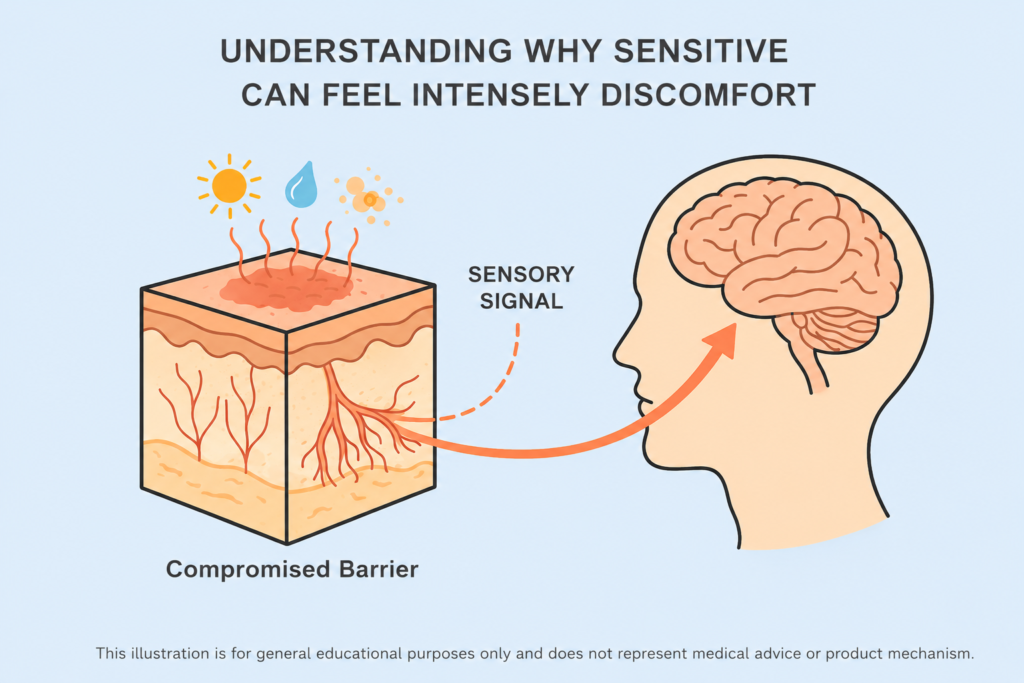
Understanding Why Sensitive Skin Can Feel Intensely Discomfort
Sensitive or dry-prone skin is not only about surface dryness. Research shows that skin comfort is influenced by both the skin barrier and the nervous system.
Here’s a simplified explanation.
When the Skin Barrier Is Weakened
When the outer skin layer becomes compromised, it allows environmental factors such as heat, sweat, fabrics, or allergens to interact more easily with the skin surface.
In response, the skin releases signalling molecules that can make the tiny nerve endings in the skin more reactive.
In simple terms, the skin’s sensory system becomes more sensitive.
How Skin Sends Signals to the Brain
The skin contains nerve fibres that communicate sensations — including warmth, touch, and itch-like discomfort — to the brain.
When the nerves are more reactive than usual, even mild triggers such as:
Heat
Fabric friction
Emotional stress
Light touch
may feel more intense than expected.
Some individuals experience stronger sensations at night when there are fewer distractions.
Why Scratching Can Become a Habit
Scratching creates competing sensations that may temporarily distract from discomfort. However, repeated scratching can irritate the skin surface and reinforce the behaviour pattern.
This can create a repetitive loop of:
sensation → scratching → temporary comfort → repeated scratching
Over time, the body may become more accustomed to this response pattern.
The Role of Stress
Emotional stress can influence how the body processes sensory signals. During stressful periods, individuals may notice increased skin sensitivity.
Stress does not cause skin conditions, but it may influence how sensations are perceived.
Supporting Skin Comfort Holistically
Because skin sensation involves both barrier health and sensory pathways, many families adopt a combined approach focused on comfort and care.
Skin Care
Maintain regular moisturising routines
Use gentle, fragrance-free cleansers
Avoid excessive heat and friction
Comfort Strategies
Keep nails trimmed
Use breathable fabrics
Apply cooling methods if comfortable
Consider gentle alternatives to fingernails to reduce harsh contact with the skin surface
If skin discomfort significantly affects sleep or daily life, consult a qualified healthcare professional for personalised advice.
Educational Note
This article is provided for general educational purposes only and is not intended as medical advice.
